
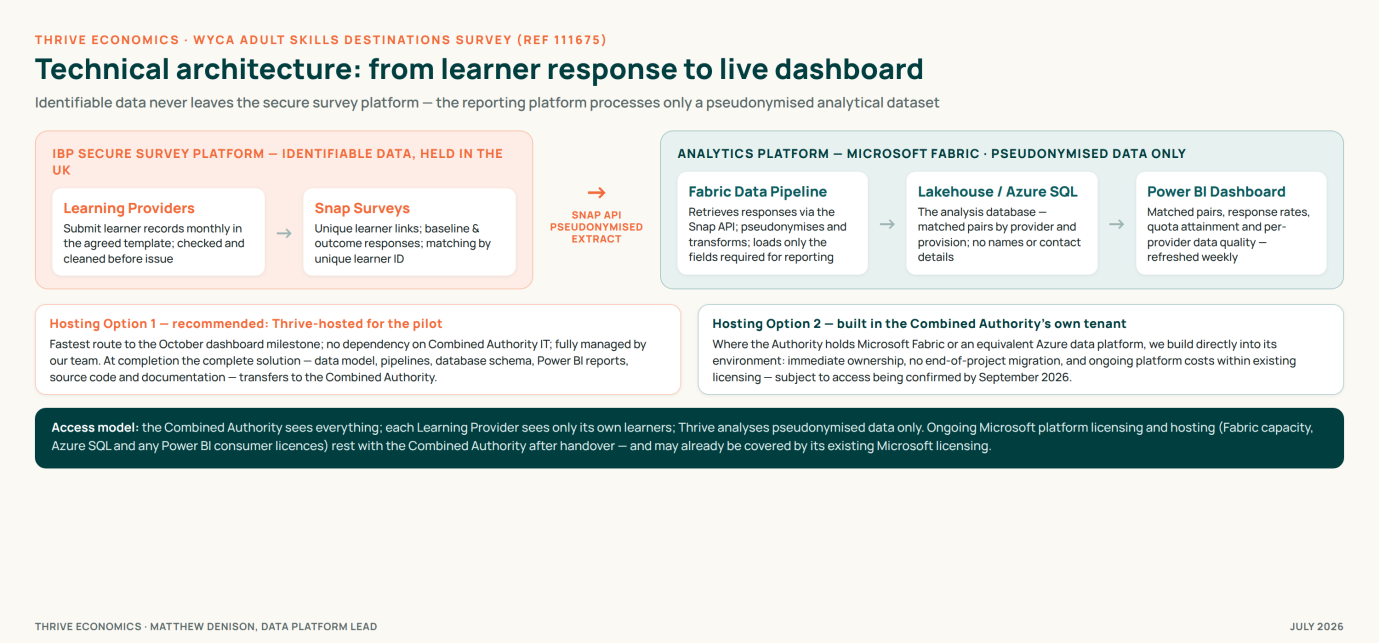
The Fabric pay-as-you-go F SKU can be paused when not in use. The design splits the platform across two workspaces so reports stay available all day while compute is paused overnight.
ETL Fabric Workspace
Hosted on a Fabric F2 pay-as-you-go capacity. The capacity is automatically resumed before the nightly ETL and paused once processing completes.
Reporting Workspace
Hosted on shared (Power BI Pro) capacity using an Import semantic model. Because the data is stored in the model, reports remain available throughout the day even while the F2 capacity is paused.
Keeping the reporting workspace on shared capacity ensures reports remain accessible without requiring the Fabric capacity to be running.
The analysis database will be a Fabric Lakehouse or Warehouse (the submitted architecture figure labels it "Lakehouse / Azure SQL").
- Azure Pay-As-You-Go subscription
- Resource Group
- Fabric F2 Capacity
- Azure Automation Account (to schedule capacity pause / resume)
- Existing Microsoft Entra tenant
| Item | Indicative cost |
|---|---|
| Data platform | |
| Fabric F2 capacity (1 hour/night) | £8–10 / month |
| Azure Automation | ~£1 / month |
| OneLake storage | ~£1 / month |
| Estimated total Azure / Fabric cost | £10–12 / month |
| Power BI shared capacity | |
| Power BI Pro licence (users may already have these) | £12–14 / user / month |
Source: proposal from Matthew Denison (Data Platform Lead) to Chris Maunder. Aligns with the technical architecture in the final submission (Q2.3).